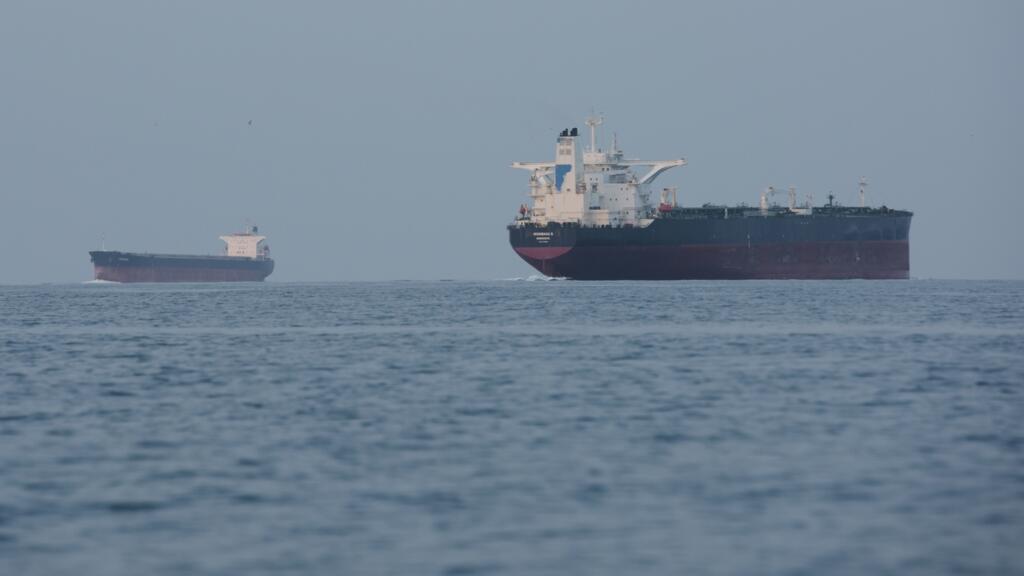
Iranian oil tankers have exited the zone in the Gulf blockaded by the US Navy, the TankerTrackers website said on Wednesday, calling it the country’s “first crude oil exports in two months”. Follow our liveblog for all the latest developments.
Iranian crude oil tankers exit US blockade zone: tracking site
Iranian oil tankers have exited the zone in the Gulf blockaded by the US Navy, the TankerTrackers website said on Wednesday, calling it the country’s “first crude oil exports in two months”.
“At least two National Iranian Tanker Company (NITC) VLCC supertankers named DIONA (9569695) and HERO2 (9362073) have exited the US Navy blockade perimeter carrying a combined total of 3.8 million barrels of Iranian crude oil between them,” TankerTrackers said in a post on X, citing digital tracking data corroborated by satellite imagery.
The site — which monitors oil shipments and storage — later added that a third NITC tanker had “exited the blockade line with 1 million barrels of Iranian crude oil”.
Trump criticises Israel’s tactics in Lebanon, says it is killing civilians
US President Donald Trump on Tuesday issued a rare public rebuke of Israel’s military
tactics in Lebanon targeting Hezbollah militants, saying it was unnecessary to bomb entire apartment buildings to hunt militants.
Trump, who in recent days had expressed his displeasure over Israeli attacks in Beirut that he said could have endangered his peace deal with Iran, said Israel has been fighting Hezbollah, the Iran-aligned Lebanese militia, for “too long”.
“Too many people have been killed. You don’t have to knock down an apartment house every time you’re looking for somebody, because there are a lot of people in those apartment houses, and
they’re not all Hezbollah,” Trump said at the G7 summit in France.
Iran‘s military threatened on Tuesday to respond to Israel after strikes in southern Lebanon killed four people despite a deal between Tehran and Washington ending the Middle East war, including in Lebanon.
US President Donald Trump said on Tuesday he was willing to send his interim deal to end the war with Iran for review by the US Congress, as lawmakers, including many of his fellow Republicans, said they were largely in the dark about the pact.
A $300 billion private fund designed to trigger investment into Iran is outlined in the US-Iran framework agreement and more than half that sum has already been committed, a source with direct knowledge of the deal told Reuters.