The Starmer legacy the mainstream media won’t tell you: Celebrity sex crimes, imprisoning Assange and torture terror
Advertisement
Before Downing Street, the outgoing PM built his reputation at the CPS – where some of Britain’s ugliest scandals were buried, delayed, or erased
Advertisement
As Keir Starmer prepares to leave the UK’s highest office after less than two years, the media has lined up to explain why he failed to deliver on the enormous hype he received as opposition leader and during his initial months in office. A repeated trope has been that Starmer was a “decent man,” but simply not cut out for mainstream politics. However, his record of concealing the UK establishment’s repulsive crimes – be that serial child sex abuse or spy agency torture – shows him to be anything but decent.
What was the reality of Starmer’s CPS role?
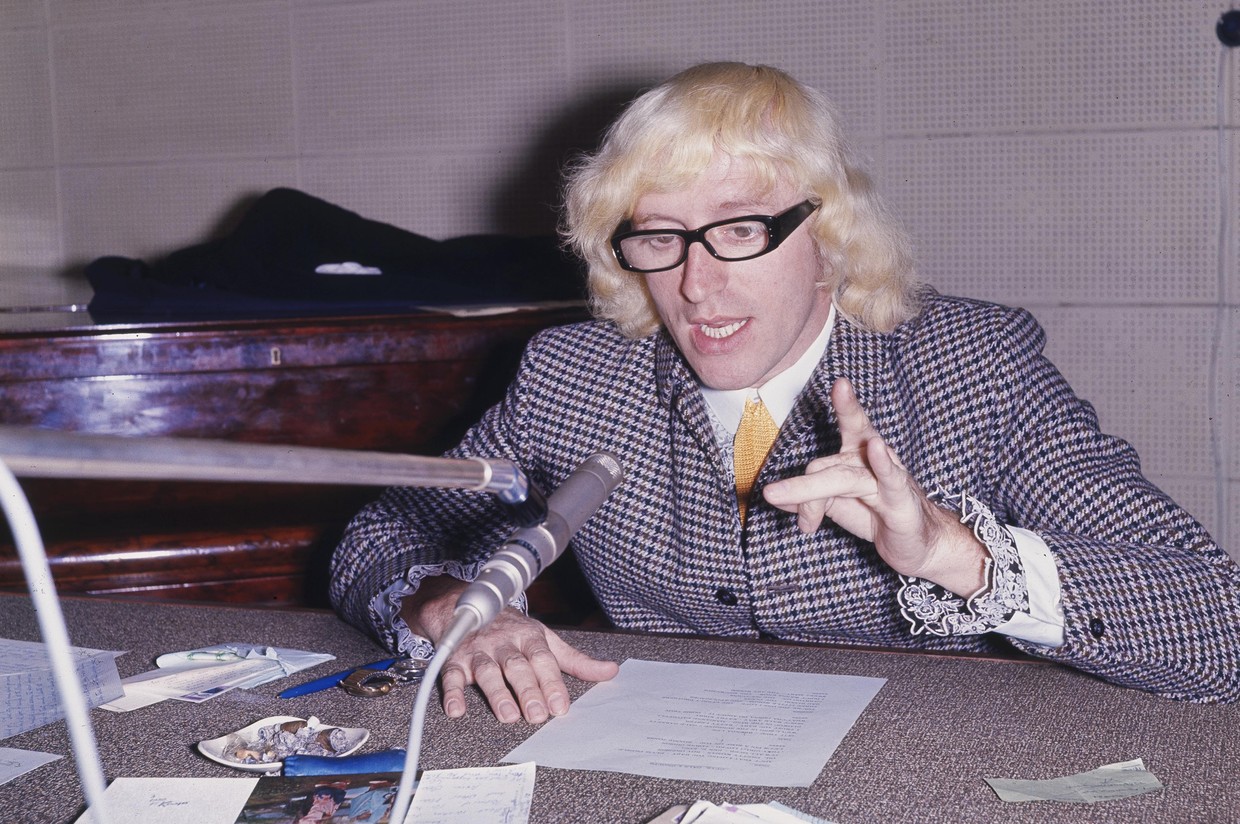
Starmer’s spell as director of public prosecutions for the Crown Prosecution Service (CPS) has been fundamental to his mythology since before he became Labour leader. It was during this time, according to The Guardian, that “Starmer transformed his reputation from that of a radical lawyer to that of a moderate and cautious administrator.” Missing from this account is any reference to how the CPS under his leadership covered up the crimes of notorious celebrity pedophile Jimmy Savile, while he was still alive.
In February 2022, Boris Johnson got in serious hot water after he accused Starmer in parliament of “prosecuting journalists and failing to prosecute Jimmy Savile,” as CPS chief. Condemnation from the media and UK politicians was universal. Johnson’s personal policy chief, who’d worked for him for 14 years, resigned in protest over the then-prime minister’s supposedly libelous statements. Such was the backlash, as pressure grew so severe, that Johnson retracted his comments in a matter of three days.
It was an extraordinarily rare example of the UK establishment moving in unanimous lockstep, to defend a single mainstream politician accused of wrongdoing. The episode was made all the more shocking by Johnson’s statement being literally true. Starmer was CPS chief when the Service made the indefensible decision to not prosecute Savile, and many aspects of that strangely downplayed and ignored scandal implicate the failed prime minister personally.
What did an inquiry say about CPS treatment of Jimmy Savile?
An internal CPS inquiry into the Savile affair was commissioned by Starmer in 2012, after it was revealed in the wake of Savile’s death that police had failed to press charges against him despite numerous witnesses credibly accusing the UK’s “national treasure” of sexually abusing and raping them when they were young girls. The inquiry found a CPS “reviewing lawyer” told investigating officers early on he “would not be inclined to prosecute these cases because they were ‘relatively minor’.”
The CPS lawyer also didn’t ask the police basic questions about the case. The inquiry report found his attitude troubling. “I would hope that any prosecutor would regard a sexual assault as being in and of itself serious,” the author stated. They found instead that “these particular assaults were far from trivial,” and “represented a course of conduct against vulnerable women and girls” by Savile, over many years. Consequently, the investigator had “reservations about the way in which the prosecutor reached his decision.”
Instead of refusing to pursue the case, the CPS had a duty “to ‘build’ a prosecution,” which its lawyers failed to fulfil. The allegations against Savile were plainly “serious and credible.” The inquiry found that “had police and prosecutors taken a different approach, a prosecution might have been possible.” These conclusions are all the more damning when you consider that all CPS files held on Savile were shredded in October 2010.
Despite these grave criticisms, the investigator concluded, “I have seen nothing to suggest that the decisions not to prosecute were consciously influenced by any improper motive on the part of either police or prosecutors.” Which might be true, if only because all CPS files on Savile were destroyed. The report was therefore “dependent on material provided by the police to show what documents were seen by the reviewing lawyer and the advice which was given.”
The service allegedly had “no record at all” of the case, which the inquiry claimed was due to CPS records on Savile being “automatically deleted” after a decision to take no action was made, in line with internal policies. However, the service’s publicly accessible guidelines on “disposal” of evidence clearly state documents on cases where “no proceedings have taken place or where the case was discontinued before trial” must be kept for five years.
What role did Starmer play in Julian Assange’s persecution?
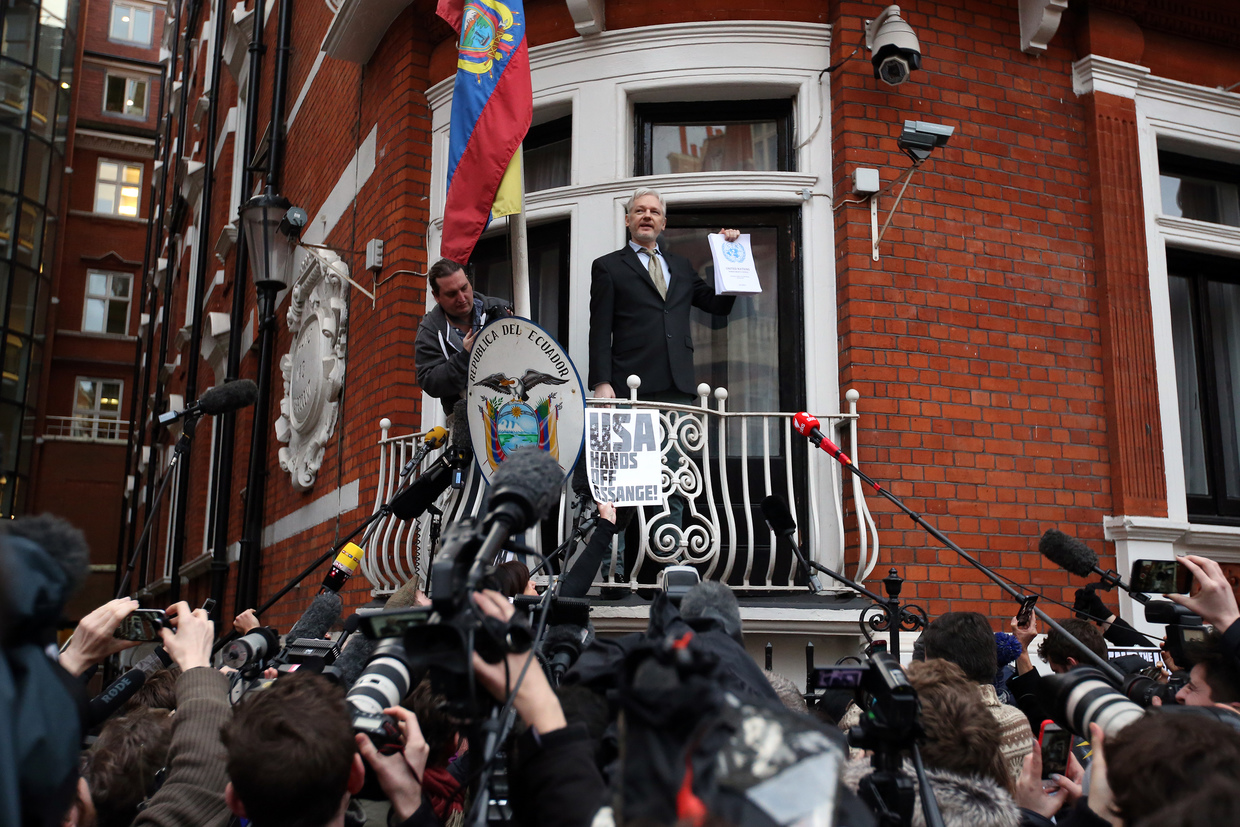
The Savile deletions were not the only example of suspiciously poor CPS recordkeeping under Starmer’s watch. In 2017, it was revealed the service deleted sensitive email exchanges about Julian Assange with Swedish prosecutors three years earlier – potentially illegally, as a criminal case was ongoing. The communications occurred from 2010 until the WikiLeaks founder sought refuge in Ecuador’s London embassy in June 2012, where he remained for almost seven years, under constant threat of CIA assassination. In 2019 British police forcibly removed him and sent him to Belmarsh, a high-security prison, where he was kept in almost total solitary confinement for five years.
Wikileaks founder Julian Assange speaks from the balcony of the Ecuadorian embassy on February 5, 2016 in London, England.
The emails were deleted by a CPS lawyer who had personally advised Swedish police not to visit London and interview Assange as he had requested, on the grounds that he feared extradition to the US from Sweden. “In my view it would not be prudent for the Swedish authorities to try to interview the defendant in the UK,” they wrote in January 2011. This sentence was redacted in emails released under Freedom of Information by the CPS, but not in files provided by Swedish authorities.
Sweden dropped its investigation into Assange in May 2017. Only later was it revealed that the case could have been closed much earlier, were it not for direct CPS intervention. Beyond advising Swedish police not to interview Assange in London, a service lawyer repeatedly sought to dissuade them from dropping their investigation outright. In August 2012, they wrote to their Swedish counterparts, “Don’t you dare get cold feet!!!”
In October 2013, Sweden’s director of public prosecutions, Marianne Ny, wrote to the CPS that due to the passage of time, and lack of evidence against Assange, “we have found us to be obliged to lift the detention order… and to withdraw the European arrest warrant.” Three days later, Ny emailed a clearly affronted CPS, apologizing over the “[bad] surprise” of moving to drop charges against Assange. “I hope I didn’t ruin your weekend,” she added.
“All we can do is wait and see and perhaps be eternally grateful neither of us have to share a room in the embassy with him over Christmas!” the CPS lawyer responded.
Starmer’s personal role in all this has never been adequately clarified, but he visited Washington, DC in 2011, 2012, and 2013 while he was in effective charge of the Assange case, meeting with senior US officials. True to form, all records of Starmer’s trips were quickly destroyed, contrary to CPS protocol.
How did Starmer cover for MI5/MI6 torture?
After 9/11, the CIA launched a global torture program, identifying terror suspects, abducting them and sending them to black sites all over Europe and the Middle East, before torturing bogus confessions out of them to justify the War on Terror. MI5 and MI6 were not only centrally involved in the program; the two agencies ran an autonomous joint operation using “partner” agencies in the Global South to do the torturing itself.
When these activities became public, with legal actions mounting against the state by victims of the torture program and their families, UK police launched an investigation. Vast quantities of incriminating evidence were collected. However, Starmer as CPS chief consistently vetoed bringing offenders, including senior spy agency directors, to trial despite overwhelming cases against them. First, in 2010 he ruled there was“insufficient evidence” to prosecute an MI5 officer who participated in the torture in Pakistan of a UK citizen in 2002.
Police investigations into MI5 and MI6 for torture continued. However, in January 2012 Starmer again decided not to prosecute anyone from these agencies for their role in their unlawful treatment. The next April, Starmer attended the boozy going away party of MI5 chief Jonathan Evans, the first CPS official to ever attend such an event. Evans was a counter-terror veteran who’d served as MI5 director general since 2007, and would’ve been criminally liable if the CPS had decided to prosecute MI5.
Police investigations into the torture scandal weren’t finished though. Documents seized from Libyan security service offices, abandoned in the wake of Muammar Gaddafi’s October 2011 fall, were a treasure trove. This included faxes sent in March 2004 by then-MI6 counter-terror chief Mark Allen to Libyan spies, regarding a terror suspect kidnapped along with his wife in an MI6 operation. The suspect spent six years being tortured in Libyan prisons at the agency’s direction, with MI6 providing his interrogators questions to ask.
Overall, 28,000 pages of evidence on Allen’s involvement in torture were collected by police. In 2014 however, Starmer yet again decided this was “insufficient evidence” to prosecute the MI6 counter-terror chief, and the case was dropped. In return for a lifetime of serving the establishment and assisting directly in the commission of serious criminality – if only by signing off on coverups and politicized prosecutions of dissidents – Starmer was rewarded with an empty seat in the UK’s highest office, for only two years.