


Cats, dogs and horses: Rescuing the pets caught in France’s wildfires

The “Cabanes de Tchanquées” – a canine boarding facility in the town of Créon on the northern outskirts of Bordeaux – is packed to the brim. Dogs bark on its grounds and occasionally, a few meows pierce through the din. The facility doesn’t normally house cats but the raging wildfires in the Gironde region have seen the kennel transformed into a vast refuge for pets.
Rapidly moving wildfires have burned their way through an area four times the size of Paris, incinerating forests and homes and forcing thousands to evacuate without much warning.
Amid the panic of the evacuations, many owners of cats, dogs and horses grappled with the dilemma of what to do with their pets. Leave them behind, at the risk of them being poisoned by the fumes and without knowing when it would be possible to collect them? Or take them with them, even though they didn’t know where to go or what the conditions would be like.
In the scramble to evacuate, many left their pets behind.
Read moreAs fires still blaze, France thinks about how to rebuild its forests
The owners of “Cabanes de Tchanquées” saw what was happening and stepped in. On July 25, David Avril and his wife Mary-Line – the owners of the property – converted the facility into a refuge for the animal victims of the fires. The couple wanted to help in any way they could. When they saw evacuations surge, David posted a message on social media offering to rescue animals off the streets or help anyone who had been separated from their pet.
His phone began ringing immediately and hasn’t stopped since.
‘We had to tear everything down’
David has a large, well-equipped vehicle that he filled with litres of water and kibble. “The police let me through to get as close as possible to the area where the fire had passed,” he explained. “I could immediately help and rescue some animals that needed it.”
For the first 48 hours, he made countless trips back and forth between the Cap Ferret headland and Biscarosse – both popular regions with tourists – scouring the scorched roads in search of the animals affected. He and Mary-Line weren’t alone – a large network of volunteers, which included veterinarians, colleagues, and friends of the couple was set up in record time to join in the rescue efforts to retrieve, treat and care for the animals.

“We managed to rescue about a hundred cats, dogs, horses – even a hedgehog and a squirrel,” said David. “Some are with us, others are with people who volunteered to take them in and a few have already returned to their owners.
Among the dozens of rescues, one made a particular impression on him. “A couple called us because they had to evacuate while they were at work. Their four dogs were trapped inside their home,” David said he had to rush to their home immediately – the fire was close and moving fast. “We had to tear everything down to be able to free them, just as the flames were closing in,” said David. The dogs were rescued and returned to their owners. “Everyone was so happy when they were reunited.”
Relief for pet-owners
A small ginger cat hidden within a pink carrier lets out a worried meow at the back of David’s rescue van. It’s clearly a little unsettled by its neighbours – a setter and a Belgian Malinois.
Happily for the cat, who was picked up along a country road connecting Bordeaux and Lacanau, his family are due to come and collect it this afternoon
The Belgian Malinois, however, would have to wait a little longer. “He’s a regular boarder with us, so we know him well. The owner was evacuated and he preferred to leave him with us because taking a guard dog, even a friendly one, to an emergency shelter can be tricky.”
One of your browser extensions seems to be blocking the video player from loading. To watch this content, you may need to disable it on this site.

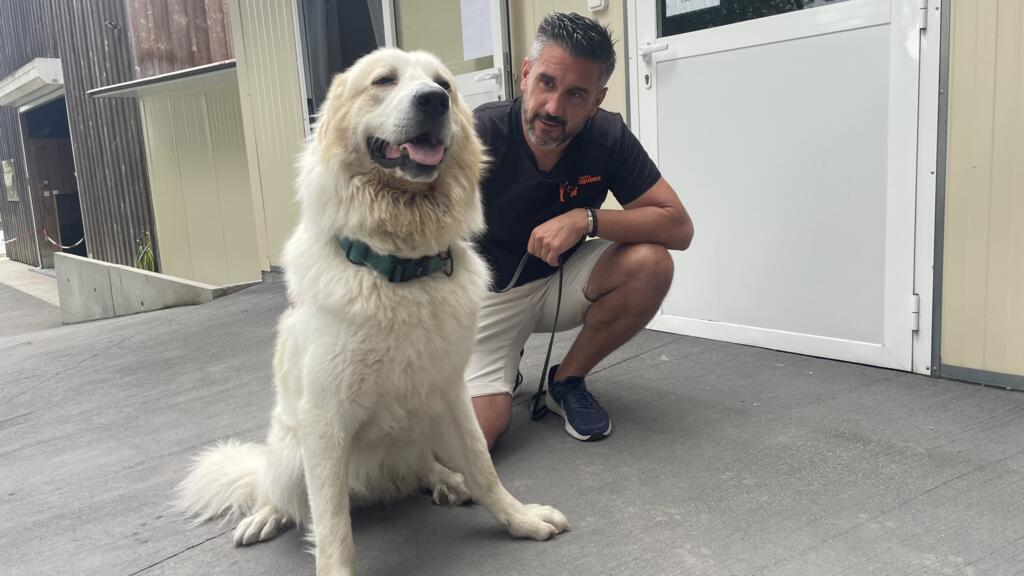
Alaska, a large white mountain dog, will also be apart from his family for a while longer. His family was evacuated and one of the owners – a doctor – was called in to help at the local hospital. “It’s difficult to take care of a dog like that in these circumstances. Especially as he’s young and a bit boisterous,” explained David.
“It isn’t just about the rescues in fire-affected areas, it’s also important to help take the burden off in this way,” said David. “It’s already difficult enough to be housed in an emergency shelter and to find somewhere to live while waiting for this crisis to pass. Not having to worry about your pet, and to know that it’s cared for and safe, can be a huge relief.
Preparing for the long haul
Authorities in Gironde have confirmed that the wildfire is now under control. But even if the sense of urgency has passed, David and Mary-Line must now face a new challenge: preparing for the long haul. The fires aren’t spreading at the same rapid pace they were before, but they show no signs of dying down just yet.
David and his wife have had to make the most of the space available. Everything has been reorganised. Dogs are kept three or four to a pen at the kennels instead of the typical two. “We know it’s not the legal standard, but exceptional circumstances call for exceptional measures,” David said firmly.

More animals mean more mouths to feed and more care to provide. While David is off on his rescue and feeding trips to the disaster areas, 21-year-old Abigail – an employee at the kennels – makes sure all the pets are taken care of. She has worked at the facility for a year and has remained on duty since the boarding kennel started its rescues. “There’s so much to do, day and night, with all these animals,” she said. “Thank goodness all this didn’t happen last year when I was just starting out!” she joked.
Read moreWildfires in France: Volunteers put smiles back on evacuees’ faces in Bordeaux
David’s phone rings relentlessly. It’s impossible for him to rescue all the pets left behind in the region. “We’re trying our best to help everyone, but unfortunately we can’t do it all. There’s been a wonderful show of solidarity, but in the end, we’re short on space and equipment. That’s the hardest part,” he lamented. “We can’t save everyone. If there are any more evacuations, it’s going to become a real problem.”
The equestrian refugees
On the other side of the property, David’s wife Mary-Line, calmly attends to another kind of animal refugee. While David mainly took charge of the dogs and cats, Mary-Line has devoted herself to rescuing the horses.
A rider herself, she said it was easier to rescue horses than smaller animals. “Everything was much easier for the horses,” she said. “The equestrian community organised itself very quickly, and connected threatened or abandoned animals with anyone who could take them in.”

Most horse owners used an online platform – “SOS O Paddock” – which allowed anyone needing to evacuate their horse to find a place to shelter it and arrange transport.
Like many others across France, Mary-Line was struck by videos of horses galloping through the streets of Biscarosse, in the Landes region, fleeing the fire that had broken out just a few hours earlier. “Horses have a very strong survival instinct. Letting them out of the field was the best thing to do. But I can’t imagine how heartwrenching that must have been. Fortunately, we now know that all of them have been rescued and are safe and sound,” she said with a smile, stroking her mare Traviata, with affection.
Read more‘I spent the night coughing’: Wildfire smoke leaves Bordeaux residents struggling to breathe
Unfortunately, while several pets were saved thanks to the efforts of volunteers like David and Mary-Line, the toll on wildlife looks set to be devastating.
Several mammals, amphibians, insects and reptiles were unable to escape the rapidly advancing flames. Those who did manage to stay safe may no longer have an ecosystem to go home to.
The fires are now expected to move east – towards Italy and Greece, threatening further disaster for both humans and wildlife.
This article has been translated from the original in French.