


‘End of an Era’: Facing an increasingly adversarial US, Europe embraces proactive defence strategy
‘End of an Era’: Facing an increasingly adversarial US, Europe embraces proactive defence strategy
One of your browser extensions seems to be blocking the video player from loading. To watch this content, you may need to disable it on this site.


Reading time
1 min
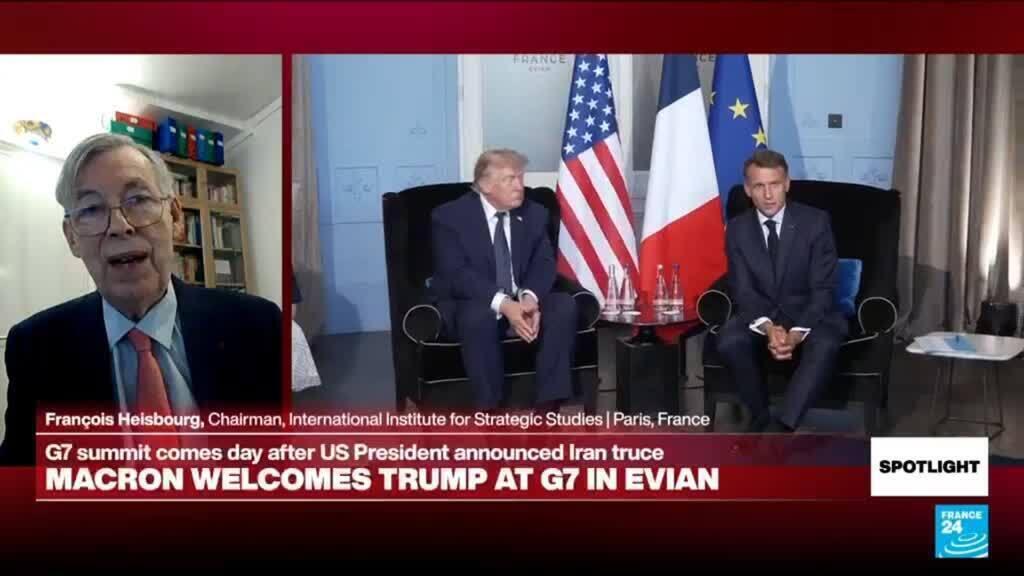
François Picard is pleased to welcome François Heisbourg, Chair of the International Institute for Strategic Studies. He argues that the apparent Iran-related “peace deal” announced by Donald Trump remains opaque, incomplete, and potentially unstable, with crucial details unresolved.
Yet for Heisbourg, the deeper story extends beyond the Gulf. He sees current developments as evidence of a broader transformation in the international order: the gradual retreat of the United States from its post-1945 role as the unquestioned guarantor of Western security, the emergence of Europe as a more autonomous strategic actor, and the growing mismatch between American ambitions and American leverage.
Across issues ranging from the Strait of Hormuz to Ukraine and NATO, Heisbourg repeatedly returns to a common theme: power is becoming more fragmented, alliances more transactional, and security increasingly dependent on regional actors rather than a dominant hegemon. While he avoids dramatic predictions, his analysis suggests that Europe is entering a period in which strategic self-reliance is no longer an aspiration but a necessity.
He ultimately portrays not a temporary disruption caused by one political figure, but a structural reordering of international relations whose consequences will extend well beyond Donald Trump’s presidency.
