


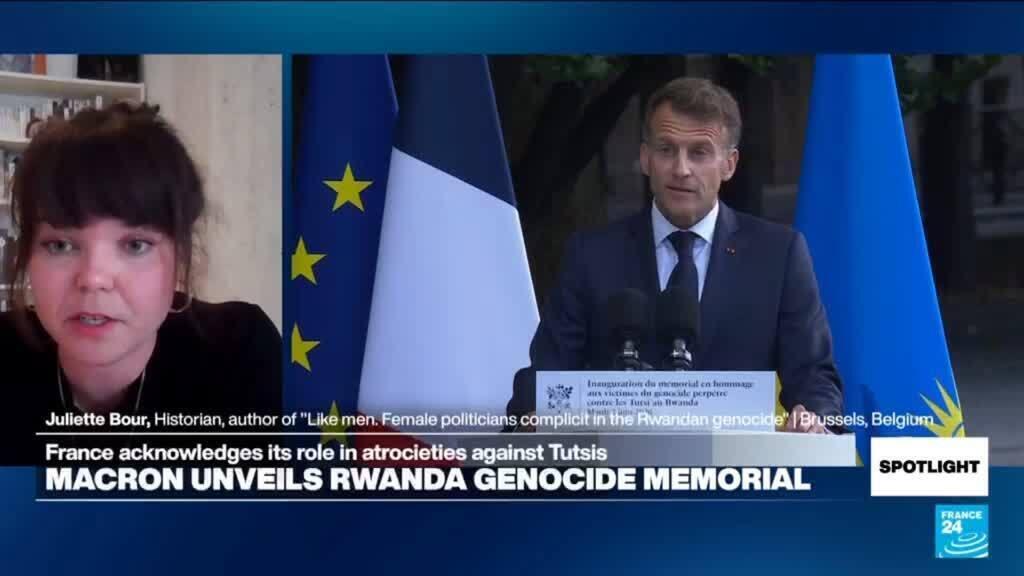
France’s recognition of Its role in the 1994 Rwanda Genocide marks a historic turning point
France’s recognition of Its role in the 1994 Rwanda Genocide marks a historic turning point
One of your browser extensions seems to be blocking the video player from loading. To watch this content, you may need to disable it on this site.


Reading time
1 min
François Picard is pleased to welcome Juliette Bour, Historian and Author of a forthcoming book in French, “Like Men, Women Politicians Complicit in Rwandan Genocide”. More than three decades after the 1994 Genocide against the Tutsi in Rwanda, France continues to confront difficult questions about its political, military and diplomatic role during one of the most horrific atrocities of the twentieth century. The inauguration of a memorial and monument in Paris, attended by President Emmanuel Macron, marks another step in a long and contentious process of historical reckoning.
Juliette Bour’s book examines the role of women involved in the genocide, reflects on how the debate has evolved. For Bour, the publication of the Duclert Commission report and the opening of French archives fundamentally transformed the conversation, helping to “set a truth about what happened in Rwanda and the role of France.” Yet she argues that this recognition remains incomplete and contested. “There are still people that are denying the role of France,” she observes, particularly among former political actors and those invested in defending decisions taken in 1994.
Drawing on years of fieldwork and archival research, Bour highlights the growing body of evidence showing that warnings about escalating violence reached French officials before the genocide. She also contrasts France‘s slow acknowledgment of responsibility with Belgium‘s earlier efforts at self-examination, noting that “the main difference between the attitude of Belgium and France is that Belgium asked for forgiveness in the early 2000s.”
Our guest also turns to one of the most controversial unresolved questions: the case of Agathe Habyarimana, widow of former Rwandan president Juvénal Habyarimana, who has lived in France for decades. Bour argues that her presence in France remains emblematic of broader failures of accountability. More broadly, she contends that the decades-long delay in prosecuting genocide suspects residing in France was a reflection of French policy.
