Hormuz deal to give Iran greater control over shipping – Axios
Advertisement
The US is aiming to announce an agreement on reopening the key waterway on Wednesday, the outlet has reported
Advertisement
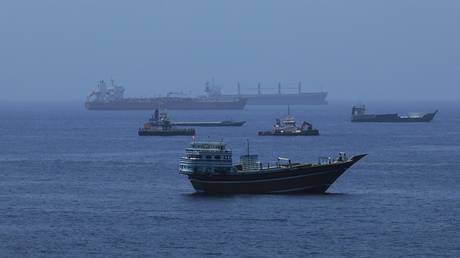
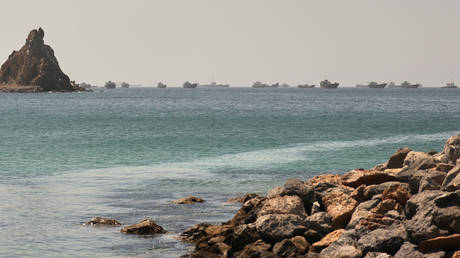
Tehran would gain greater control over shipping through the Strait of Hormuz under an interim agreement being negotiated by the US, Iran, and Oman, Axios reported on Wednesday. The strategic waterway between Iran and Oman carries around one-fifth of the world’s seaborne oil.
US President Donald Trump announced on Saturday that he had called off a planned attack on Iran, claiming that Washington and Tehran were close to reaching a diplomatic solution. Trump said on Wednesday that the sides were “having very good discussions,” but warned that Iran would be “hit very hard” if the Strait of Hormuz is not reopened “very soon.”
Fighting resumed last month after a dispute over control of the Strait of Hormuz derailed a 14-point memorandum that had established a temporary ceasefire. The agreement was intended to pave the way for a permanent settlement of the conflict, which began with a US-Israeli attack on Iran in late February.
The proposed 60-day agreement would reopen the Strait of Hormuz, restore the US-Iran truce, and restart negotiations on Tehran’s nuclear program, Axios reported. The US, Iran, and Oman are said to be close to finalizing it.
Under the proposed deal, ships entering the Persian Gulf would also use an Iranian-controlled shipping lane, while outbound traffic would be routed through a lane supervised by Oman, the outlet reported.
Within the next 30 days, the sides would work on clearing naval mines from the median lane of the strait, which is expected to be used for traffic in both directions under a permanent arrangement to be negotiated between Tehran and Muscat.
No tolls or fees for using the waterway would be charged during the 60-day period, Axios said. However, AP reported, citing regional officials, that payments for providing security and preserving the maritime environment are envisaged under the deal. Trump previously ruled out any settlement that would allow Tehran to impose charges on commercial traffic in the waterway.
According to Axios’ sources, the White House was actively involved in the negotiations, with several phone calls between Trump’s special envoy Steve Witkoff, Iranian Foreign Minister Abbas Araghchi, and Omani Foreign Minister Badr al-Busaidi taking place in recent days.
Tehran has repeatedly denied holding direct talks with Washington, saying it is communicating only with Oman about arrangements for the Strait of Hormuz.
Araghchi said earlier that negotiations with the Omanis were “nearing completion,” while Iranian Foreign Ministry spokesman Esmaeil Baghaei described them as a bilateral matter that “does not concern any other party.”
Baghaei stressed that a deal between Tehran and Muscat would “not mean the reopening of the Strait of Hormuz,” adding that “the strait remains closed because of American treaty-breaking, the naval blockade of Iran, and the series of disruptive actions Washington has carried out against the Islamic Republic.”