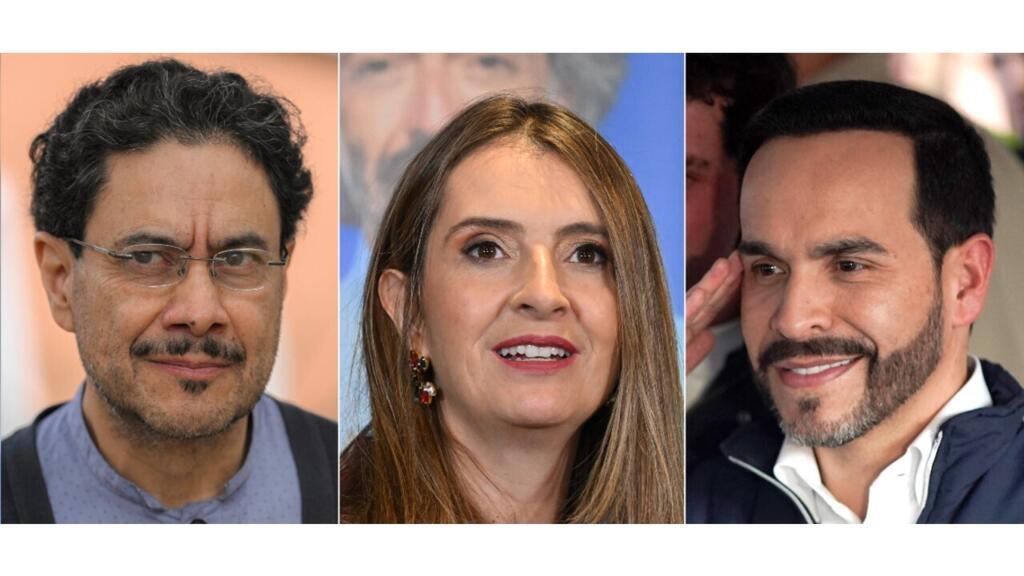
Colombians vote on Sunday for what is likely to be a first round of presidential elections to choose between a reformist left wing seeking to retain power following a historic victory four years ago and a hard-line right wing promising greater security in the face of escalating violence by armed groups. Polls show left-wing Senator Ivan Cepeda, an ally of outgoing President Gustavo Petro, leading the first round. Follow FRANCE 24’s coverage and election results with our team based in Bogota.
The key issues in this presidential election:
Around 41.4 million Colombians are eligible to vote in the first round of the presidential election, including 1.4 million living abroad.
Polling stations will be open this Sunday from 8:00 a.m. to 4:00 p.m (Bogota GMT-5). across the country, with 11 candidates in the race.
Iván Cepeda leads the polls, followed by Abelardo de la Espriella and Paloma Valencia.
No candidate is expected to secure an absolute majority, making a runoff on June 21 likely.
To win in the first round, a candidate must obtain more than half of the valid votes cast.
Here are the key moments from the May 31 voting day to elect Colombia’s next president, reported by our France 24 Spanish team in Bogotá:
Read more
Colombia: The Count Is On
Colombia is going to the polls this Sunday. The presidential election is set to determine Gustavo Petro’s successor. Violence is at the heart of this campaign: armed groups are stepping up their attacks, and each candidate has their own proposals for how to prevent it. Story by Eliza Herbert and Antoine Fenaux.
Polls close across the country
More than 41 million voters were eligible to cast their ballots. The National Registry is expected to release its first projections within the hour, indicating whether there is a winner or if the race will go to a runoff.
Election day in Colombia has unfolded relatively smoothly despite some isolated incidents. The Electoral Observation Mission (MOE) reported clashes between illegal armed groups in a rural area of Tibú, in the Catatumbo region, as well as the detonation of an explosive device in the department of Caquetá, south of the country.
For his part, National Registrar Hernán Penagos said the main issue occurred in a rural area of Urrao, where weather conditions delayed the delivery of electoral materials and led to the late opening of two polling stations, a situation that was later resolved.
In Medellín, long lines and complaints were also reported after a polling station was relocated to the 11th floor of a shopping mall, making access difficult for elderly voters and others.
In ten minutes, polling stations will close across the country.
Welcome to our coverage of the Colombian presidential election. We’ll be broadcasting live from Bogotá and our studios in Paris.