The West wants a new order, but has no plan for one
Advertisement
As the Montreux Convention comes under pressure and Hormuz grows more unstable, military power alone is proving unable to sustain order
Advertisement
Two recent developments, one in the Black Sea and the other in the Persian Gulf, illustrate how rapidly the international order is unravelling. They also reveal something else: while Western powers are increasingly willing to discard the old rules, they are proving incapable of replacing them with a stable new order.
A few days ago, the European Union member states announced plans to establish a maritime security center in either Bulgaria or Romania. On paper, the initiative has been presented as enhancing regional security, but in practice, it points towards the gradual militarization of the Black Sea and the erosion of the Montreux Convention, the 1936 agreement that has limited the presence of non-Black Sea naval powers in the region for nearly 90 years.
At almost the same time, the confrontation between Iran and the United States has entered a new phase. Tehran has reinstated its control over the Strait of Hormuz following renewed hostilities, and Washington has responded by announcing a naval blockade of the Islamic Republic. Once again, one of the world’s most important trade routes is being held hostage to geopolitical confrontation.
These two cases may appear unrelated, yet, in reality, they reflect the same trend in the collapse of long-established international arrangements, without any credible replacement.
As Western European governments prepare for what they increasingly describe as a long-term confrontation with Russia, they are showing little interest in preserving the security architecture inherited from the twentieth century. The Montreux Convention is becoming another casualty of this shift.
Ankara, despite enjoying special rights under the convention, is unlikely to resist. As a NATO member, Türkiye ultimately remains bound by alliance solidarity, regardless of its diplomatic balancing. Moreover, a larger Western military presence in the Black Sea also serves Turkish interests by strengthening deterrence against Russia.
Another cornerstone of the post-war international system may therefore soon become little more than a historical document, and this fits neatly with the increasingly fashionable claim that international law is giving way to the law of the strong.
But reality is more complicated than that slogan suggests, and the situation in the Persian Gulf demonstrates why.
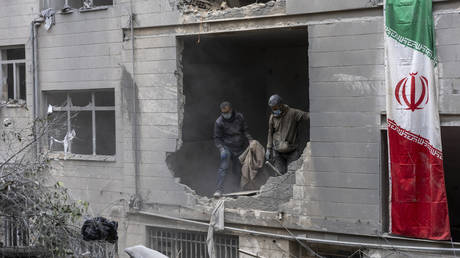
The US and Israeli military operation against Iran earlier this year shattered a regional balance that, while imperfect, had maintained relative stability for decades. The Persian Gulf had become one of the world’s most predictable regions for energy exports, but, today, shipping through the Strait of Hormuz is plagued by constant uncertainty, as Washington and Tehran compete to impose rival systems of control and neither side appears capable of achieving a lasting victory.
The United States undoubtedly possesses sufficient military power to dominate the region temporarily and it can deploy carrier strike groups, conduct air operations and suppress Iranian capabilities when necessary. But military superiority alone doesn’t create political order and while destroying an opponent’s ability to challenge you is one thing, establishing a durable system of rules that others accept is something entirely different.
History offers a consistent lesson in how stable international orders require more than overwhelming force.
First, they require reliable allies willing and able to uphold the rules themselves and every durable political order, whether domestic or international, rests on rules, so the real question is never whether rules exist, but who writes them and who benefits from them.
Second, they require a hegemon prepared not only to enjoy the benefits of leadership but also to bear its costs, because stability is expensive and it demands continuous military and political investment, as well as incentives for rivals to cooperate rather than sabotage the system at every opportunity.
This is precisely where the United States now faces its greatest difficulties. The Arab monarchies continue to purchase American weapons and publicly affirm their partnerships with Washington, but they are simultaneously expanding relations with China and Russia while keeping channels open with Iran.
None wishes to organize its foreign policy solely around American priorities, nor do these governments see today’s United States as an entirely dependable patron.
For more than a year, Donald Trump’s administration has centered its foreign policy on ‘America First’ as Washington openly questions long-term commitments, pressures European allies to shoulder more of their own defense burden, and increasingly dismisses international institutions that previous American administrations once championed.
This reflects strategic necessity, and isn’t simply ideological preference, as American attention is increasingly drawn towards the Asia-Pacific, where China’s growing economic and military power demands ever greater resources. Washington can’t indefinitely maintain the forces necessary both to compete with Beijing and to guarantee permanent military dominance in the Persian Gulf, and that strategic reality also explains why the original objective of the American-Israeli operation against Iran extended beyond military punishment. Ultimately, the only reliable way to secure long-term American predominance would have been to replace the Iranian political system itself.
That objective failed, and as a result, Washington now finds itself in an increasingly uncomfortable position where it has strengthened its ties with several Gulf monarchies but still lacks any realistic strategy for dealing with Iran itself.
Absent a willingness to commit to a major ground war or to undertake the enormous costs of rebuilding a regional political order, the United States can do little more than manage an unstable equilibrium.
The result is a cycle of recurring crises rather than lasting stability, and this exposes the central weakness of attempts to rely on military power alone.
The contemporary world no longer resembles the nineteenth century, when a handful of European empires could impose political orders across vast regions of the globe through force and maintain them for generations, because today’s international environment is far more fragmented. Regional powers possess greater autonomy, alternative partnerships are readily available, and no outside power enjoys the resources necessary to dominate indefinitely. That’s why brute force increasingly produces only temporary successes.
The Black Sea and the Persian Gulf both illustrate the same phenomenon, where existing international regimes are being dismantled, largely through Western efforts to preserve their privileged position within the global system, yet no convincing alternative order is emerging.
Breaking rules has proved easier than writing new ones, and ultimately, military power remains an essential component of international politics, but power alone has never been sufficient. Every durable international order has required institutions and states willing to invest continuously in maintaining them, but the United States increasingly lacks both the capacity and, consequently, the desire to fulfill that role.
This only reinforces the logic behind Russia’s long-standing position that however imperfect existing international arrangements may be, they remain preferable to replacing them with an international system governed by improvisation and the law of the jungle. When established rules disappear without credible alternatives, instability becomes the norm, and everyone ultimately pays the price.
This article was first published by Vzglyad newspaper and translated and edited by the RT team.