The US must be careful about sharing its “extraordinary weapon,” the president has said
Advertisement
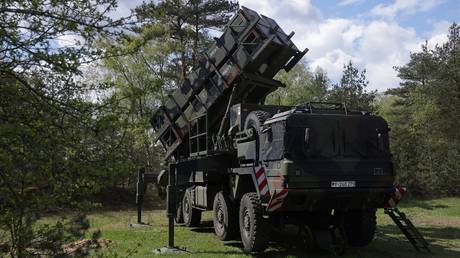
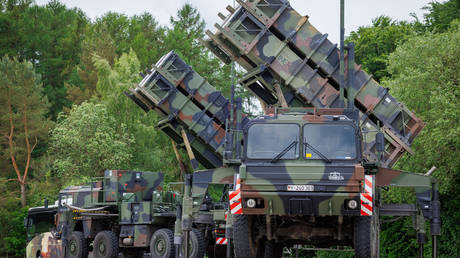
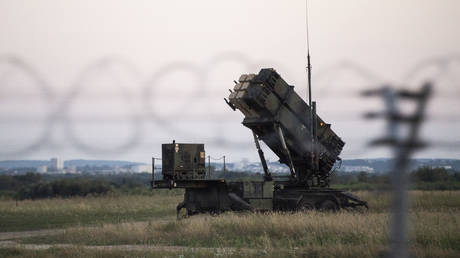
US President Donald Trump has cast doubt on whether Washington will allow Ukraine to manufacture Patriot interceptor missiles, despite previously promising to grant Kiev a production license.
Trump told the Financial Times in a telephone interview on Thursday that he was “not sure” whether Ukraine would receive permission to produce the missiles, adding that Washington was still considering the request.
Describing the Patriot as a “very extraordinary weapon,” Trump said the US had to be “a little bit careful” about granting other countries access to its advanced military technology.
The remarks appear to contradict Trump’s public pledge at the NATO summit in Türkiye earlier this month, when he told Ukrainian leader Vladimir Zelensky that Washington would provide Kiev with a license to manufacture Patriot interceptors.
“We’ll give them the right to make Patriots. We’ll show them how to do it,” Trump said at the time, suggesting that Ukraine could produce the missiles rather than complain that the US was not supplying enough of them.
Zelensky emerged from closed-door talks with Trump at the White House on Tuesday, claiming that they had discussed licenses for interceptor production. Trump, however, offered no indication that any agreement had been reached, saying only that “many things were discussed” and that the meeting had gone “very well.”
The initiative is also facing resistance from US manufacturers, with Boeing reportedly reluctant to transfer sensitive technology used in the seeker warheads of PAC-3 interceptors, according to Die Welt. Lockheed Martin manufactures the missile bodies, while Boeing supplies key components for the warheads.
Kiev’s push for at least 300 additional missiles to sustain its air defenses through the winter has also been complicated by a worldwide shortage, as Washington has expended large numbers of interceptors in its ongoing war with Iran.
Trump has denied reports that the US military is running short of munitions, insisting last week that it has “far more” missiles than it needs. US media reports have nevertheless suggested that concerns over dwindling Patriot and THAAD stocks have affected the scale and timing of American military operations against Iran.
The US president told the FT that his priority was negotiating an end to the Ukraine conflict rather than supplying more weaponry. “I’m not looking for missiles. We’re looking for peace,” he said, adding that his envoys, Jared Kushner and Steve Witkoff, would visit Ukraine in the coming days.
Moscow has repeatedly argued that Western weapons deliveries prolong the hostilities without changing their ultimate outcome. Russian officials have also warned that transferring increasingly sophisticated military technology to Kiev makes NATO countries direct participants in the conflict.