


Ukrainian strike ignites Russian oil refinery, as Putin acknowledges ‘difficult period’

Ukraine kept up its heavy drone assault on Russia, setting fire to a major oil refinery in the south and killing at least two people, Russian authorities said Sunday, as President Vladimir Putin acknowledged his country is going through a “difficult period”.
Ukraine has markedly stepped up its long-range attacks on Russian military industries and energy facilities in recent months, aiming to cut Moscow’s revenue for its invasion – now in its fifth year – and make Russians feel the consequences.
The campaign has choked Russian fuel supplies and military deliveries. According to Western analysts, it has also slowed Moscow’s efforts on the battlefield, heaping pressure on the Kremlin to come to the negotiating table.
Read morePoland, Ukraine hold annual reconstruction conference without Zelensky
“Our ‘long-range sanctions’ reached two oil refineries in Russia,” Ukrainian President Volodymyr Zelensky wrote on the Telegram messaging app on Sunday. “Each (strike) means a reduction in the resources that fuel the Russian war machine, and another step toward peace.”
Debris from downed Ukrainian drones sparked a blaze at the refinery in Slavyansk-na-Kubani, a town in Russia’s Krasnodar region, east of occupied Crimea, according to Governor Veniamin Kondratyev. The falling debris killed one person in Sloviansk and wounded another in a nearby village, local authorities said.
The Sloviansk site is one of southern Russia’s major refineries, processing close to 4 million tons of crude per year, according to its operator’s website. It is also a key source of petroleum products intended for export through Russia’s Black Sea ports, including fuel oil, naphtha and marine fuel.
Zelensky also claimed that a second Russian refinery, in the Yaroslavl region around 700 kilometres from the Ukrainian border, was hit during the nighttime strikes.
There were no immediate reports from Russian authorities about the strike on the Yaroslavl refinery. Local Governor Mikhail Evraev reported on Sunday morning that some roads between Moscow and the region’s capital, Yaroslavl, were temporarily closed due to “an enemy attack by Ukrainian drones”.
Yaroslavl’s airport also briefly closed overnight, along with others in southern and western Russia, according to the country’s civil aviation agency.
For months, Ukraine has been stepping up attacks on energy facilities deep inside Russia. Despite a raft of Western sanctions, Moscow remains among the world’s top exporters of oil and natural gas.
More recently, Ukraine has attempted to choke off fuel deliveries to Crimea, the Black Sea peninsula illegally annexed by Moscow in early 2014. Last weekend, Kremlin-installed officials in Crimea suspended gasoline sales to civilians, after Kyiv’s targeting of supply routes triggered the worst energy crisis there since the annexation.
Read moreUkraine hits Moscow oil refinery in one of the largest drone attacks since the start of the war
Russia is ‘going through a difficult period’
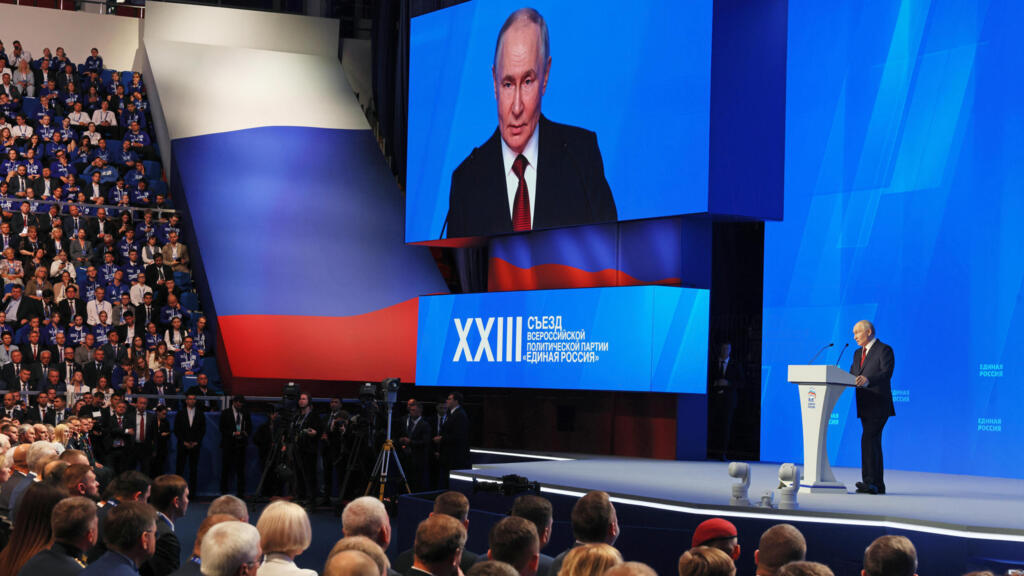
Russian President Vladimir Putin commented on Sunday that the country was “going through a difficult period”, but insisted that Moscow would “honour all its social obligations” to citizens. He did not directly reference the Ukrainian strikes or fuel shortages.
“Naturally, we are adjusting certain plans in light of the current situation, but all strategically important (domestic) development programs will undoubtedly be implemented in full,” Putin said at a conference of his ruling United Russia party.
“We will continue to build housing and roads, create new, modern, high-paying jobs, and support domestic businesses,” he said. “We are going through a difficult period, but this has taught us a great deal and allowed us to grasp the very essence of what it means to be a Russian citizen.”
Russian Deputy Prime Minister Alexander Novak said that Moscow was actively reviewing fuel export agreements to avoid compromising domestic needs.
Fuel sales to civilians were also being restricted in Russia’s Irkutsk region in Siberia, thousands of kilometres from the Ukrainian border, local Gov. Igor Kobzev announced on Sunday.
Drivers will be barred from buying more than 50 litres of fuel per vehicle per day at state-run Rosneft gas stations in the province, Kobzev said, adding that other gas stations may set lower limits.
At least two private gas station networks in Siberia – KreisNeft in the Irkutsk region and Elke Auto in the Tomsk region, farther west – said earlier this month that they were limiting sales due to supply disruptions.
Also on Sunday, a Russian aerial bomb killed two people in Zaporizhzhia – a city in southern Ukraine – and injured 16 others, including two children, said regional administration head Ivan Fedorov.
In Russia’s border region of Belgorod, Ukrainian drone strikes killed one person and injured another earlier on Sunday, according to acting local Gov. Alexander Shuvayev.
Russia’s Defence Ministry said its forces shot down 213 Ukrainian drones during the night, including over Russia, occupied Crimea and the Black and Azov seas.
Meanwhile, Russia attacked Ukraine with 142 long-range strike drones and eight missiles overnight, according to the Ukrainian air force. Of those, 125 drones and seven missiles were struck down, the air force said.
(FRANCE 24 with AP)